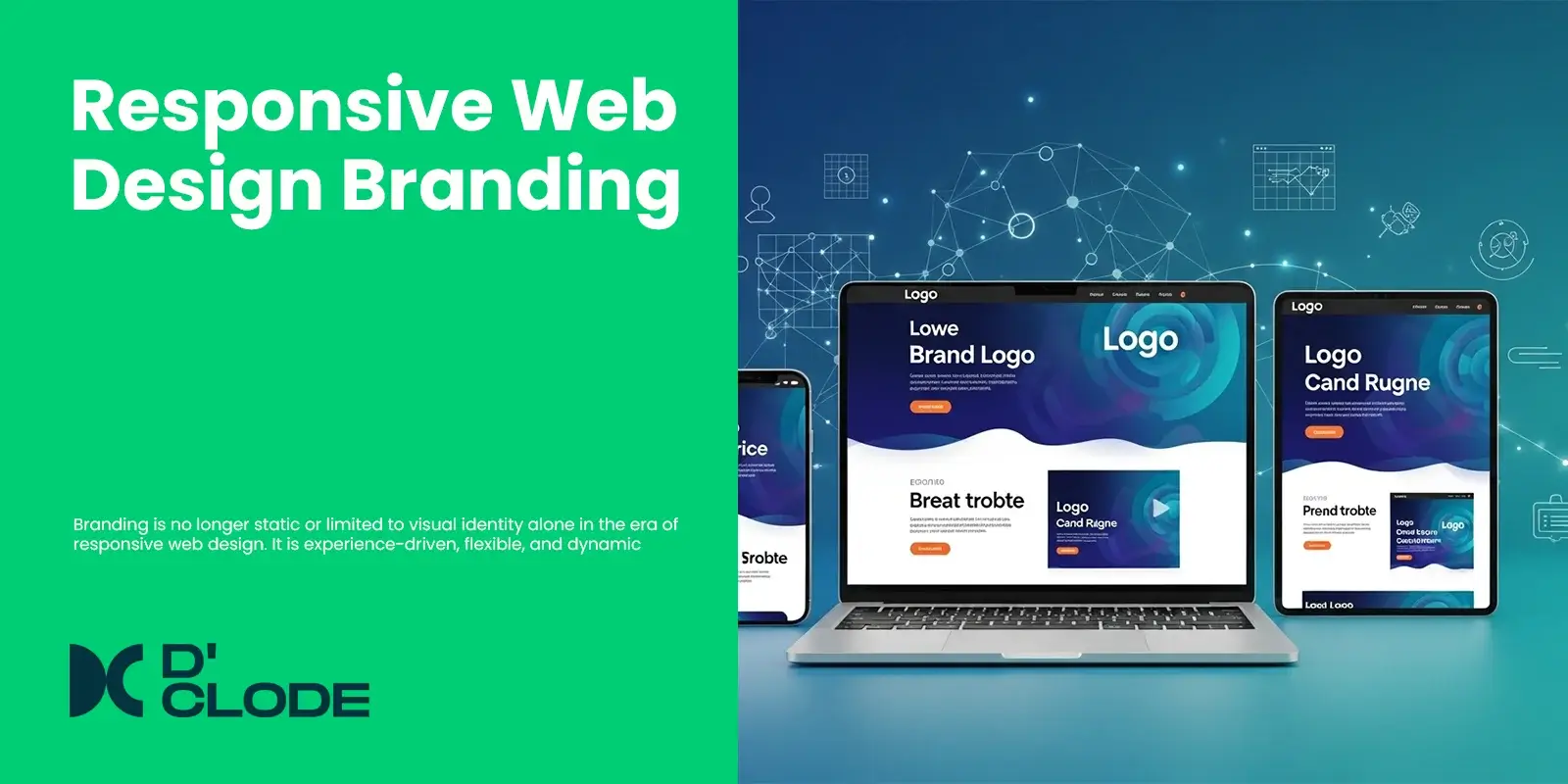
The way brands engage with consumers has changed in the digital age. As smartphones, tablets, and various screen sizes have grown in popularity, responsive web design, or RWD, has become crucial for providing consistent online experiences. Beyond usability, however, responsive design is essential to branding because it makes sure that a business’s personality, values, and identity are maintained throughout all digital touchpoints. In this sense, branding encompasses more than just logos and colour schemes; it also includes how customers interact with a brand consistently across platforms.
At its core, branding is about influencing people’s opinions. Users’ experiences, not just what they see, define a brand in the era of responsive web design. While a cluttered, unresponsive website can undermine credibility, a responsive, seamless interface upholds professionalism, dependability, and modernity. Through usability, speed, and design, the website transforms into a silent brand ambassador that conveys values.
Consistency is the foundation of a powerful brand. Responsive design makes sure that the visual identity and user experience are consistent whether a user is browsing on a desktop, smartphone, or tablet. This constancy improves trust and brand recall. To avoid diluting its image, a luxury brand that prioritises elegance, for instance, must maintain clean layouts and seamless navigation across all screens.
With responsive web design, branding adopts a user-first mentality. Respect for their audience is shown by brands that make investments in adaptive layouts, fast-loading pages, and accessibility. This upholds brand principles like creativity, compassion, and diversity. A brand’s dedication to the customer experience is frequently reflected in how responsive a website is.
In the age of RWD, interaction also becomes a component of identity, but typography, colour schemes, and imagery still play a major role in branding. Sophistication is communicated by a responsive website that changes seamlessly with smooth animations or simple navigation. On the other hand, a badly designed website may imply carelessness. Therefore, “how it feels” is just as important to branding today as “how it looks.”
Through search engine optimisation, responsive design also has an indirect impact on branding. Because Google favours mobile-friendly websites, responsiveness raises a website’s visibility. Consistently ranking at the top of search results gives a brand more authority and recognition. In this sense, responsive design is a branding strategy as well as a technical decision.
Future of Branding in Responsive Design
Wearable technology, foldable screens, and immersive AR/VR experiences are just a few examples of how responsive design will develop into “responsive branding.” In order to effectively translate their identity to new platforms while maintaining their core values, brands must continue to be flexible. Maintaining recognition while adjusting to constantly evolving digital environments will be difficult.
Conclusion
Branding is no longer static or limited to visual identity alone in the era of responsive web design. It is experience-driven, flexible, and dynamic. A responsive website promotes consistency, increases brand credibility, and harmonises identity with user expectations. Ultimately, responsive design is an essential extension of brand identity itself in a world that prioritises digital technology. It is not just about functionality.