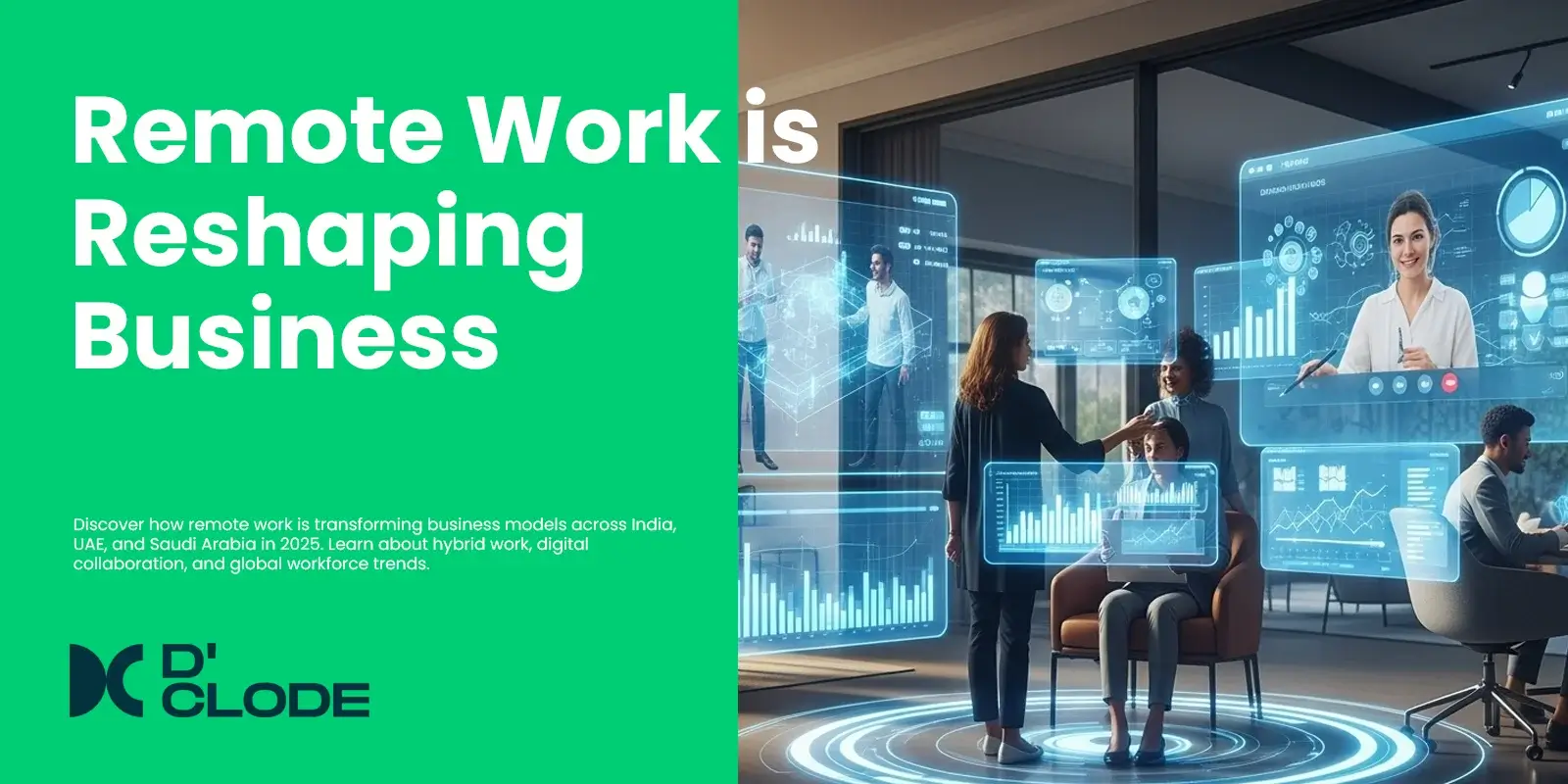
The pandemic has significantly changed the notion of work, and remote working and hybrid working models have taken a permanent form globally by 2025. Businesses in India, UAE, and Saudi Arabia are responding to that change by reconsidering how teams collaborate, communicate, and function in a digital-first environment.
Startups and tech-enabled firms in India are leading the change with flexible work environments ,as employees can do business from anywhere, while remaining productive. As for the UAE and Saudi Arabia, they have invested significantly in digital infrastructure and smart office ecosystems, making it possible to work remotely while collaborating with cloud-based systems and AI technology to assist with the collaboration.
The most significant benefit associated with remote work is access to the global talent pool. Businesses can now hire the best talent no matter where they live, improving diversity and innovation. This also allows for flexibility for the employee and is an advantage because it will minimize overhead for the employee and organization.
This trend also drives new ways of leading, communicating, and securing data. Organizations are leveraging innovative project management software, safe communication tools, and virtual meeting software for enhanced productivity and connectivity.
The new workplace reality means organizations allowing hybrid flexibility and larger digital transformations will maintain momentum. The future of work is not simply about the physical workplace—it’s about how well we connect, create, and contribute to the global economy!